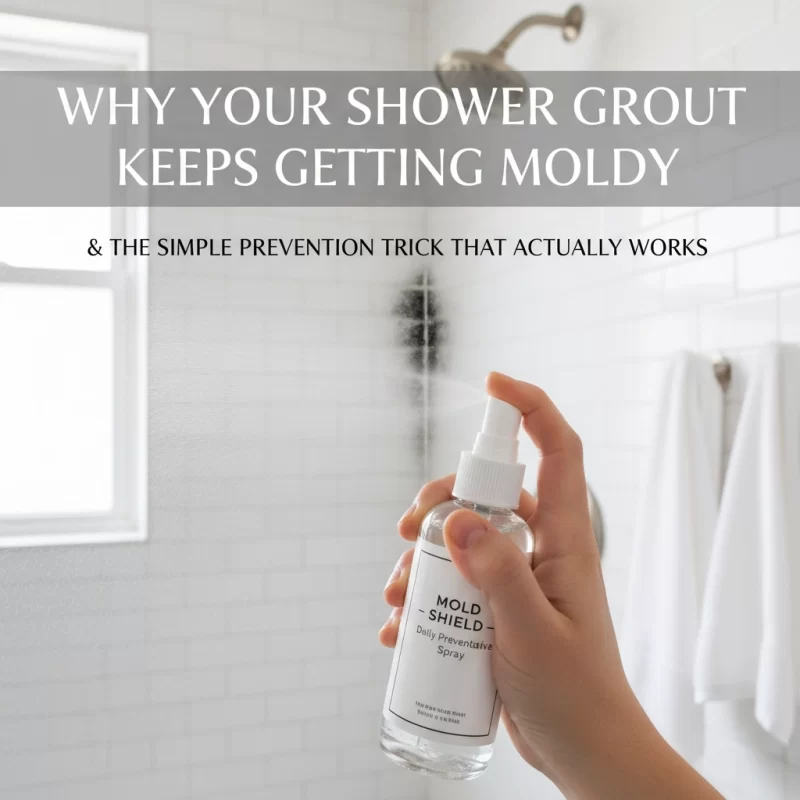
You scrub, you bleach, you spray every mold-killing product on the market. Yet within weeks, those dark, fuzzy spots creep back into your shower grout lines like unwelcome house guests who just won’t take the hint.
If you’re tired of playing this endless game of mold whack-a-mole, you’re not alone. Most homeowners in Orange County battle this same frustrating cycle, wondering why their grout seems to be a mold magnet no matter what they do.
The truth? You’re probably fighting the symptoms instead of addressing the root cause. But there’s one incredibly simple prevention trick that actually works: and it doesn’t involve any fancy chemicals or expensive treatments.
The Real Reason Your Grout Keeps Getting Moldy
Understanding why mold loves your shower grout so much is the first step to stopping it for good. It’s not just bad luck or old grout: your shower creates the perfect storm of conditions that mold absolutely thrives in.
Grout Is Like a Sponge (And Mold Loves That)
Here’s what most people don’t realize: grout is naturally porous. It’s made from a mixture of cement, sand, and water, which creates tiny holes and gaps throughout the material. Think of it like a microscopic sponge that soaks up moisture and holds onto it.
Every time you shower, water doesn’t just sit on top of your grout: it penetrates deep inside, where it stays trapped long after you’ve dried off and left the bathroom. This hidden moisture creates the perfect breeding ground for mold spores to settle in and multiply.

Your Bathroom Temperature Is Mold’s Sweet Spot
Mold isn’t picky about much, but it definitely has temperature preferences. It thrives in environments between 77°F and 88°F: which happens to be exactly the temperature range most bathrooms maintain, especially during and after hot showers.
When you combine this ideal temperature with the humidity from your shower, you’ve essentially created a luxury resort for mold. The warm, moist environment signals to mold spores that this is prime real estate for setting up shop.
Poor Air Circulation Keeps the Party Going
In bathrooms with inadequate ventilation, moisture lingers instead of evaporating. Without proper airflow, the dampness from your shower stays trapped, giving mold all the time it needs to establish colonies in your grout lines.
Even if you have an exhaust fan, it might not be powerful enough, or you might not be running it long enough to effectively remove all the excess moisture.
Mold’s All-You-Can-Eat Buffet
Contrary to popular belief, mold isn’t actually eating your grout. Instead, it feeds on all the organic matter that accumulates in your shower: soap scum, shampoo residue, body oils, dead skin cells, and general bathroom grime.
These substances build up in grout lines over time, decomposing and providing the nutrients mold needs to flourish. Your shower essentially becomes an all-you-can-eat buffet for hungry mold spores.
The Simple Prevention Trick That Actually Works
Ready for the game-changer? The most effective way to prevent mold in your shower grout is surprisingly straightforward: dry your shower surfaces after every use.
That’s it. No expensive products, no harsh chemicals, no complicated maintenance routines. Just grab a squeegee and spend two minutes removing water from your shower walls, doors, and surfaces after each use.

Why This Works So Well
By removing water immediately, you’re eliminating the primary condition mold needs to grow. No moisture means no mold: it’s that simple. When you dry your shower surfaces right after use, you prevent water from penetrating deep into the grout where it would normally sit and create problems.
This method is incredibly effective because it addresses the root cause rather than trying to kill mold after it’s already established. Prevention is always easier than remediation.
How to Do It Right
Keep a high-quality squeegee in your shower and use it on all surfaces immediately after showering. Start from the top and work your way down, removing water from walls, glass doors, and any other surfaces where water accumulates.
After squeegeeing, leave your shower door or curtain open to allow air circulation. This helps any remaining moisture evaporate quickly instead of lingering in the enclosed space.
Additional Prevention Strategies That Make a Difference
While drying your shower is the most important step, combining it with these other strategies creates an even more effective mold prevention system.
Master Your Bathroom Ventilation
Run your exhaust fan before, during, and for at least 30 minutes after your shower. If you don’t have an exhaust fan, open a window to promote air circulation. Consider upgrading to a humidity-sensing fan that automatically turns on when moisture levels rise and shuts off when the air is sufficiently dry.
The goal is to keep your bathroom humidity below 50%. High-quality ventilation is one of the most effective ways to achieve this.
Control Organic Buildup
Regular cleaning prevents the accumulation of soap scum, body oils, and other organic materials that mold feeds on. Use a daily shower cleaner to create a protective barrier that prevents grime from sticking to surfaces.
A weekly deep clean with a grout-safe cleaner helps remove any buildup before it becomes a mold food source. Pay special attention to corners and areas where soap and shampoo tend to accumulate.

Consider Grout Sealing
Sealing your grout reduces its porosity, making it much harder for water to penetrate and creating a smoother surface that’s easier to clean. Quality grout sealer acts like a protective barrier, repelling water and preventing organic materials from getting trapped in grout lines.
Professional grout sealing typically lasts 1-2 years, depending on usage and maintenance. While it’s not a permanent solution, it significantly reduces mold risk when combined with proper cleaning and drying habits.
Address Plumbing Issues Promptly
Any leaks, drips, or standing water create additional moisture that encourages mold growth. Fix plumbing issues immediately and ensure your shower doesn’t have any areas where water pools or fails to drain properly.
Regular inspection of caulk lines, shower heads, and fixtures helps you catch potential water issues before they become mold problems.
When Prevention Isn’t Enough
Sometimes, despite your best prevention efforts, existing mold problems are too extensive for DIY solutions. If you’re dealing with widespread mold, discolored grout that won’t clean, or persistent odors, it might be time to consider professional grout restoration.
Professional services can completely remove and replace damaged grout, apply antimicrobial treatments, and seal surfaces to prevent future problems. This gives you a fresh start with clean, properly sealed grout that’s much easier to maintain.
The Bottom Line on Mold Prevention
Preventing mold in shower grout doesn’t require expensive products or complicated maintenance routines. The simple act of drying your shower after each use, combined with proper ventilation and regular cleaning, is incredibly effective at stopping mold before it starts.
By understanding why mold loves your grout so much: the porous material, ideal temperature, poor ventilation, and abundant food sources: you can take targeted action to eliminate these conditions. Prevention is always easier, cheaper, and more effective than trying to remove mold after it’s already established.
The key is consistency. Make drying your shower part of your routine, just like brushing your teeth. Once it becomes a habit, you’ll be amazed at how much cleaner and mold-free your shower stays with minimal effort.
Your grout will thank you, your bathroom will look better, and you’ll finally win the war against bathroom mold for good.